
The Everest region of Nepal is one of the most iconic trekking destinations in the world. At the center of this extraordinary Himalayan landscape lie two places that define almost every journey into the Khumbu: Lukla Airport and Namche Bazaar. Together, they form the primary gateway to Mount Everest, serving as the starting point and the commercial heart of the region.
From the dramatic landing at Lukla Airport to the vibrant Sherpa town of Namche Bazaar, these destinations are more than just stops on a trekking itinerary. They represent the spirit of adventure, resilience, and cultural richness that defines the Everest region.
Lukla Airport: The Gateway to Everest
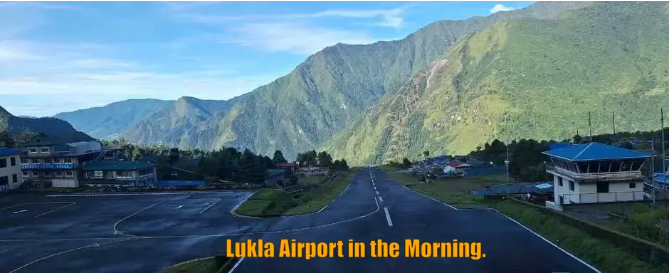
Lukla Airport, officially known as Tenzing–Hillary Airport, is often described as one of the most thrilling airports in the world. Located at an altitude of approximately 2,860 meters (9,383 feet), the airport sits on the edge of a mountain ridge, surrounded by steep Himalayan terrain. For most travelers, this airport marks the beginning of their Everest adventure.
The runway at Lukla is famously short and sloped, measuring just over 500 meters in length. One end of the runway faces a sheer mountain wall, while the other drops abruptly into a deep valley. This unique geography means that planes can only land from one direction and take off in the opposite direction. As a result, only highly experienced pilots with specialized training are permitted to operate flights here.
Flights to Lukla usually depart from Kathmandu or, during peak trekking seasons, from Ramechhap. The journey takes around 30 to 40 minutes, offering breathtaking aerial views of snow-capped peaks, river valleys, and terraced hillsides. Weather conditions play a critical role in flight operations, and delays or cancellations are common due to fog, wind, or cloud cover.
Despite these challenges, Lukla Airport is a lifeline for the Khumbu region. It handles thousands of trekkers, climbers, guides, and porters each year. In addition to passengers, the airport is essential for transporting food supplies, construction materials, medical equipment, and emergency evacuations. Without Lukla Airport, access to the Everest region would require weeks of walking from lower elevations.
Lukla Village: More Than Just an Airstrip
While Lukla Airport is the main attraction, the village of Lukla itself deserves attention. The town is lively and welcoming, filled with lodges, teahouses, bakeries, trekking shops, and small markets. Many trekkers spend their first night here to adjust to the altitude before heading deeper into the mountains
Lukla is also where trekkers officially enter Sagarmatha National Park, a UNESCO World Heritage Site. Prayer flags flutter in the wind, mani stones line the trails, and Buddhist monasteries remind visitors that this region is as spiritual as it is adventurous.
For Sherpa families, Lukla represents opportunity. Tourism has transformed the village into an economic hub, providing livelihoods through hospitality, guiding, porter services, and trade. The airport, though small, has reshaped the entire region’s connection to the outside world.
The Trek from Lukla to Namche Bazaar
The journey from Lukla to Namche Bazaar is one of the most famous trekking routes on Earth. Spanning roughly 13 kilometers, the trail typically takes two days to complete, allowing time for acclimatization and rest.
The path descends from Lukla through pine forests and small Sherpa villages such as Phakding. Suspension bridges draped with prayer flags cross the Dudh Koshi River, offering dramatic views and unforgettable photo opportunities. As trekkers move higher, the landscape becomes more rugged, and the air noticeably thinner.
The final ascent to Namche Bazaar is challenging but rewarding. A steep uphill climb leads to the first distant views of Mount Everest on a clear day. This moment is often emotional for trekkers, as it marks their first glimpse of the world’s highest peak.
Namche Bazaar: The Sherpa Capital of the Khumbu
Namche Bazaar sits at an altitude of approximately 3,440 meters (11,286 feet) and is widely known as the capital of the Everest region. Built in a natural amphitheater shape on a mountainside, the town offers panoramic views of towering peaks, including Kongde Ri, Thamserku, and on clear mornings, Everest itself.
Historically, Namche Bazaar was an important trading center between Nepal and Tibet. Salt, wool, and livestock were exchanged here long before modern trekking brought international attention. Today, while trade continues, tourism is the dominant economic force.
The town is remarkably well developed considering its remote location. Visitors will find internet cafés, gear shops, pharmacies, bakeries, banks, and even Irish pubs. Every Saturday, a vibrant weekly market draws villagers from surrounding areas to sell vegetables, yak products, and household goods.
Acclimatization and Life in Namche Bazaar
Namche Bazaar is the primary acclimatization stop for trekkers heading toward Everest Base Camp or other high passes. Most itineraries include at least two nights here to allow the body to adjust to the altitude.
During acclimatization days, trekkers often hike to nearby viewpoints such as the Everest View Hotel or visit the Sherpa Culture Museum. These short hikes help the body adapt while offering insight into Sherpa history, mountaineering achievements, and local traditions.
Life in Namche Bazaar is a blend of tradition and modernity. Monks walk alongside trekkers carrying the latest trekking gear, and centuries-old monasteries coexist with modern coffee shops. Despite the influx of visitors, Sherpa culture remains strong, grounded in Buddhism, community values, and respect for the mountains.
Cultural and Spiritual Significance
Both Lukla Airport and Namche Bazaar play an important role in preserving and showcasing Sherpa culture. Festivals such as Mani Rimdu are celebrated with masked dances, prayers, and communal gatherings. These events attract trekkers and locals alike, offering a rare opportunity to witness Himalayan spiritual traditions.
Buddhist stupas, prayer wheels, and monasteries are integral to daily life. Trekkers are often reminded to walk clockwise around religious monuments, a small but meaningful gesture of respect. These cultural elements add depth to the trekking experience, transforming it from a physical challenge into a cultural journey.
Best Time to Visit Lukla and Namche Bazaar
The best seasons to visit Lukla Airport and Namche Bazaar are spring (March to May) and autumn (September to November). During these periods, the weather is generally stable, skies are clear, and mountain views are at their best.
Spring offers blooming rhododendron forests and warmer temperatures, while autumn provides crisp air and excellent visibility after the monsoon rains. Winter treks are possible but extremely cold, and flights to Lukla are more frequently disrupted. The monsoon season brings heavy rain and cloud cover, making travel more challenging.
Conclusion
Lukla Airport and Namche Bazaar are far more than logistical points on the way to Mount Everest. Lukla Airport represents the dramatic threshold between modern life and the remote Himalayas, while Namche Bazaar embodies the cultural, economic, and spiritual heart of the Khumbu region.
Together, they shape every Everest journey—welcoming adventurers, sustaining local communities, and standing as enduring symbols of human determination in one of the world’s most extreme environments. For anyone drawn to the Himalayas, understanding Lukla Airport and Namche Bazaar is essential to appreciating the true essence of the Everest region.