
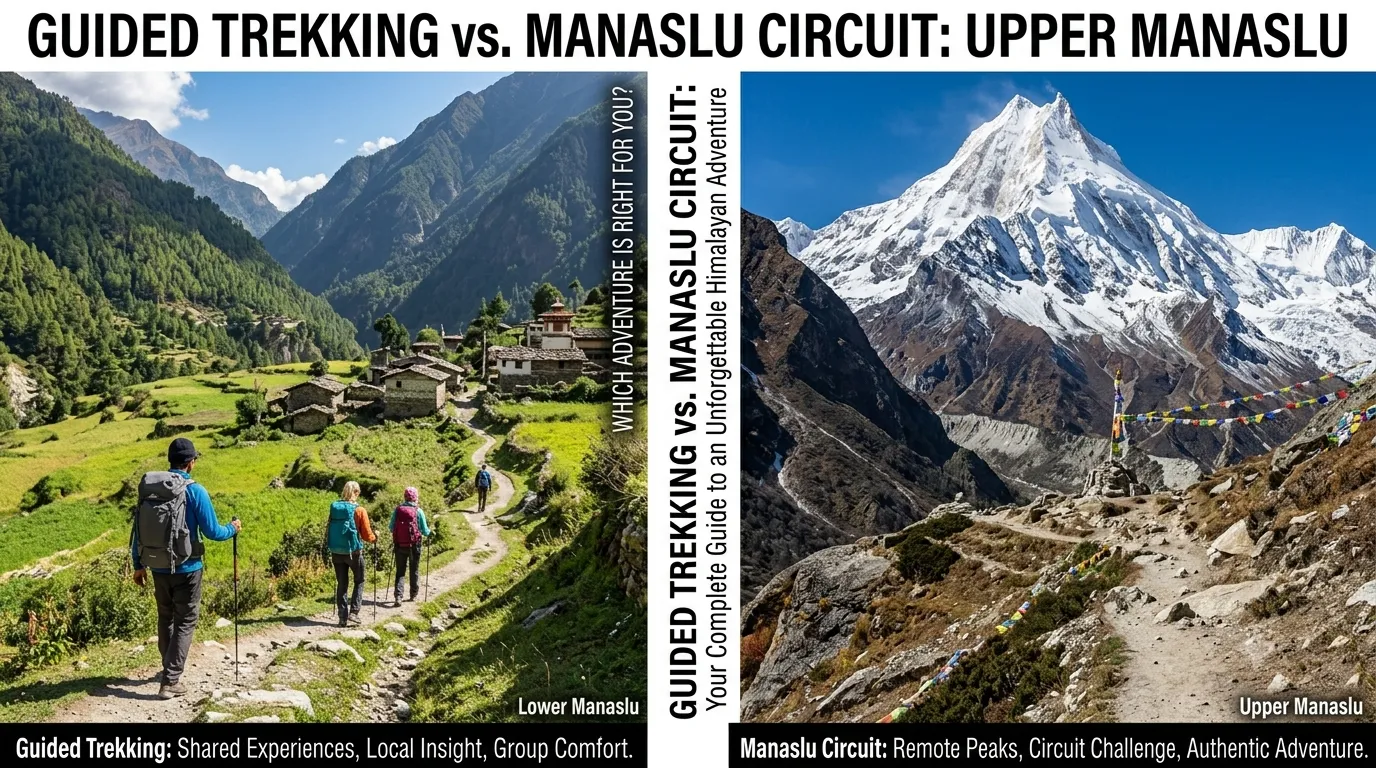
The Manaslu Circuit Trek is one of Nepal’s most rewarding trekking adventures, offering breathtaking Himalayan landscapes, authentic mountain villages, and a less crowded alternative to the Everest and Annapurna regions. Circling the world’s eighth-highest mountain, Mount Manaslu (8,163 meters), this spectacular journey takes trekkers through remote valleys, ancient monasteries, and the challenging Larkya La Pass.
Before setting foot on this incredible trail, understanding trekking permit fees is essential. The Manaslu region is a restricted area, meaning several permits are mandatory for every visitor. These permits help preserve the environment, support local communities, and regulate tourism in one of Nepal’s most culturally significant trekking destinations.
This guide explains everything you need to know about trekking permit fees for the Manaslu Circuit Trek, including permit types, costs, regulations, and practical tips for planning your journey.
Why the Manaslu Circuit Trek Requires Special Permits
Unlike many popular trekking routes in Nepal, the Manaslu Circuit Trek passes through a government-designated restricted area. The region borders Tibet and has unique cultural and ecological importance.
The permit system helps:
-
Protect fragile mountain ecosystems
-
Preserve local Tibetan-influenced culture
-
Control visitor numbers
-
Improve trekking safety
-
Support conservation projects
-
Generate revenue for regional development
Without the required permits, trekkers are not allowed to enter the restricted section of the trail.
Trekking Permit Fees for the Manaslu Circuit Trek
Every trekker must obtain three different permits.
1. Manaslu Restricted Area Permit (RAP)
This is the most important permit for the trek.
The fee varies according to the trekking season.
September to November
-
USD 100 per person for the first 7 days
-
USD 15 per day after the seventh day
December to August
-
USD 75 per person for the first 7 days
-
USD 10 per additional day
Since most Manaslu Circuit Trek itineraries last between 12 and 16 days, many trekkers pay additional daily fees depending on their schedule.
2. Manaslu Conservation Area Permit (MCAP)
The trek passes through the Manaslu Conservation Area, home to diverse wildlife, forests, and traditional villages.
Permit fee:
-
NPR 3,000 per foreign trekker
-
SAARC nationals receive discounted rates according to Nepal Tourism Board regulations.
3. Annapurna Conservation Area Permit (ACAP)
After crossing Larkya La Pass, the trail enters the Annapurna region.
Permit fee:
-
NPR 3,000 per foreign trekker
-
Reduced fees apply for SAARC visitors.
Estimated Total Trekking Permit Fees
The total cost depends on your trekking season and itinerary.
For most international trekkers:
-
Restricted Area Permit: USD 75–130+
-
MCAP: NPR 3,000
-
ACAP: NPR 3,000
Overall, most trekkers spend approximately USD 130 to USD 180 on permits alone, depending on exchange rates and trek duration.
Why Permit Fees Are Worth Paying
Many trekkers initially wonder why permit costs are higher in the Manaslu region than on other trails.
These fees contribute to:
-
Trail maintenance
-
Conservation programs
-
Wildlife protection
-
Local infrastructure
-
Rescue coordination
-
Tourism management
-
Cultural preservation
The result is a cleaner, quieter, and more authentic trekking experience.
Can You Trek Manaslu Without a Guide?
No.
One important regulation for the Manaslu Circuit Trek is that independent trekking is not permitted.
Trekkers must:
-
Hire a licensed Nepal trekking guide
-
Book through a registered trekking agency
-
Travel in a group of at least two trekkers (excluding the guide)
The agency arranges all required permits on your behalf.
Documents Required for Trekking Permits
To process your permits, your trekking agency usually requests:
-
Passport copy
-
Nepal visa copy
-
Passport-size photographs
-
Travel itinerary
-
Emergency contact information
-
Travel insurance details
Providing these documents early helps avoid delays.
How Trekking Agencies Handle Permit Applications
Most visitors never need to visit government offices themselves.
Your trekking company typically:
-
Collects your documents
-
Completes application forms
-
Pays government fees
-
Obtains official permits
-
Registers your itinerary
This makes the process simple and convenient.
Best Season and Permit Costs
Although permit fees vary slightly throughout the year, choosing the right trekking season is even more important.
Spring (March–May)
Spring offers:
-
Rhododendron forests in bloom
-
Comfortable temperatures
-
Excellent mountain views
-
Stable weather
Permit prices remain in the lower seasonal category.
Autumn (September–November)
Autumn is considered the best season for the Manaslu Circuit Trek.
Advantages include:
-
Crystal-clear skies
-
Dry trails
-
Mild daytime temperatures
-
Outstanding visibility
However, this period also has the highest Restricted Area Permit fee.
Winter (December–February)
Winter offers peaceful trails and lower permit costs.
Trekkers should prepare for:
-
Heavy snowfall
-
Cold temperatures
-
Possible Larkya La Pass closures
Monsoon (June–August)
Although permit fees are lower, trekking during monsoon presents challenges such as:
-
Heavy rainfall
-
Landslides
-
Leeches
-
Reduced visibility
-
Slippery trails
Only experienced trekkers should consider this season.
Typical Manaslu Circuit Trek Itinerary
A standard itinerary includes:
Day 1 – Kathmandu arrival
Day 2 – Drive to Machha Khola
Day 3 – Jagat
Day 4 – Deng
Day 5 – Namrung
Day 6 – Lho
Day 7 – Samagaun
Day 8 – Acclimatization
Day 9 – Samdo
Day 10 – Dharamsala
Day 11 – Cross Larkya La Pass to Bimthang
Day 12 – Tilije
Day 13 – Dharapani
Day 14 – Drive to Kathmandu
The exact duration affects your Restricted Area Permit cost if your stay exceeds seven days.
Budget Beyond Trekking Permit Fees
When planning the Manaslu Circuit Trek, permits are only one part of the overall budget.
Additional expenses include:
-
Guide fees
-
Porter services
-
Transportation
-
Accommodation
-
Meals
-
Travel insurance
-
Equipment rental
-
Personal expenses
-
Tips for guides and porters
Planning your finances in advance helps avoid unexpected costs.
Important Permit Rules
Trekkers should remember these regulations:
-
Always carry your permits.
-
Keep your passport available during checkpoints.
-
Follow the approved trekking itinerary.
-
Stay with your registered guide.
-
Do not enter restricted areas without authorization.
-
Respect local customs and conservation rules.
Permit inspections are common throughout the trail.
Tips for Saving Money on the Manaslu Circuit Trek
Although permit fees are fixed, you can reduce your overall trekking expenses by:
-
Joining a small group to share guide and transport costs.
-
Booking during the shoulder season.
-
Renting trekking equipment instead of buying new gear.
-
Packing essential clothing before arriving in Nepal.
-
Planning your itinerary efficiently to avoid extra Restricted Area Permit charges.
Why the Manaslu Circuit Trek Is Worth the Cost
Many experienced trekkers consider the Manaslu Circuit Trek one of Nepal’s finest long-distance adventures. The permit fees may be higher than those for some other routes, but they help preserve the region’s natural beauty and cultural heritage while ensuring a safer trekking environment.
Unlike busier trekking destinations, the Manaslu region offers quieter trails, traditional villages, spectacular Himalayan scenery, and a genuine sense of exploration. Crossing the dramatic Larkya La Pass, visiting centuries-old monasteries, and experiencing authentic mountain hospitality make every permit dollar worthwhile.
Final Thoughts
Understanding trekking permit fees is a crucial step when planning the Manaslu Circuit Trek. Every trekker must obtain the Restricted Area Permit, the Manaslu Conservation Area Permit, and the Annapurna Conservation Area Permit before beginning the journey. Since permits can only be arranged through a registered trekking agency, booking with a reputable operator simplifies the process and ensures compliance with Nepal’s regulations.
While permit costs add to the overall trekking budget, they play an important role in protecting the region’s unique landscapes, supporting local communities, and maintaining one of the Himalayas’ most remarkable trekking routes. With the right preparation, permits in hand, and a well-planned itinerary, the Manaslu Circuit Trek promises an unforgettable adventure through some of Nepal’s most pristine mountain scenery.